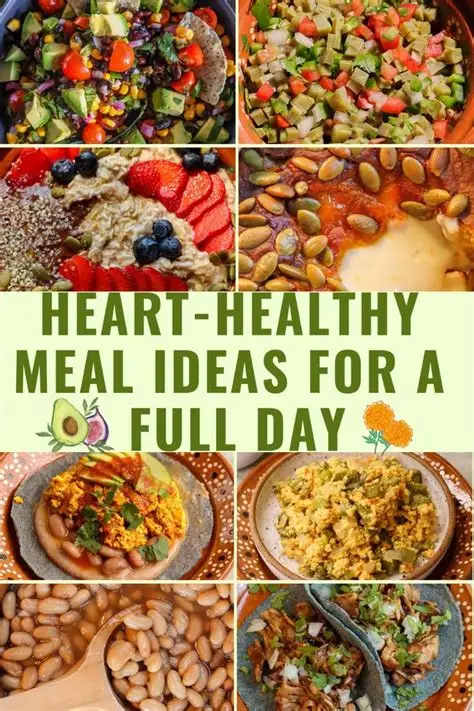
Fiber Foods:
Introduction: Boost the fiber content of your daily meals
Healthy eating doesn’t have to cost the earth or be hard to do. Sometimes all it takes is a few more healthy ingredients to your everyday meals to make your diet a little better.
High-Fiber Foods – where to start Fiber is something you want to include in your diet on a regular basis. You will find fruit, vegetables, beans, lentils, seeds, nuts and whole grains.
And, like flowers, there is more to fibre than just digestion. The different fibre-containing ingredients also provide different nutrients, so, eating a mix is ideal to help you stay in good shape.
The positive side is that you won’t have to use special health products or anything of the sort to kick-start your efforts. In fact, you should be able to do it all with some basic food items available at your local supermarket, and then make a few tasty preparations of them.
See what are the best option, simple meal ideas and the easy ways to add fibre to your daily menu.
1. High-Fiber Foods That Should be in Your Kitchen
Make your life easier before you plan your meals by understanding which common foods contain fibre.
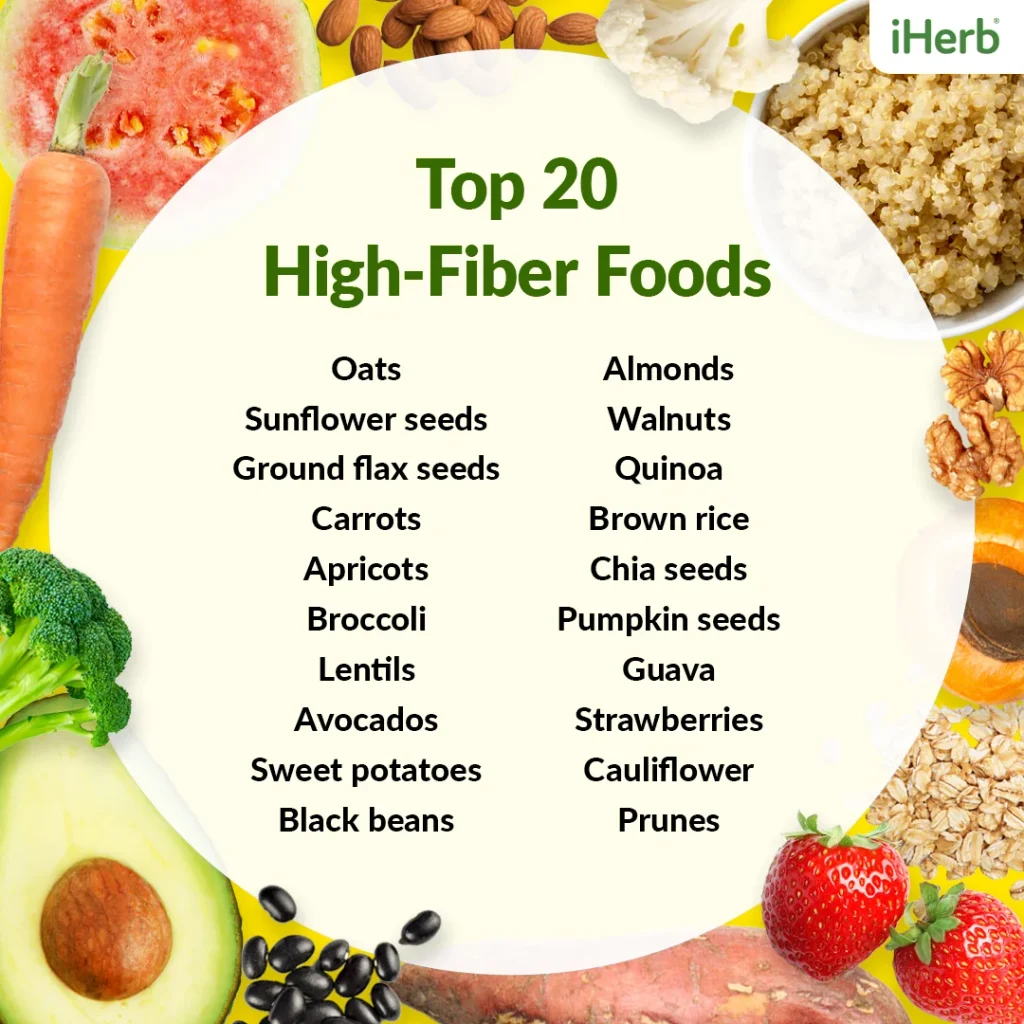
These are some good options:
| Food | Why it is a good choice |
|---|---|
| Oats | Provide soluble fibre and work well for breakfast |
| Lentils | Contain fibre and plant-based protein |
| Chickpeas | Useful in salads, spreads, and cooked meals |
| Kidney beans | Add fibre to soups, rice dishes, and stews |
| Pears | Provide fibre when eaten with the skin |
| Raspberries | Offer fibre and naturally sweet flavour |
| Broccoli | Adds fibre and useful vitamins |
| Chia seeds | Provide fibre and can thicken overnight oats |
| Almonds | Supply fibre, healthy fats, and some protein |
| Sweet potatoes | Provide fibre, especially when the skin is eaten |
By not eating the one ingredient every single day, you can alternate between these options. It will introduce some variety to your meals and you’ll also be able to enjoy some different flavors.
2. High-Fiber Foods for a Better Morning Routine
It’s also a great time to boost the amount of fibre in your diet.
But some popular choices at breakfast contain very little fibre. Sweet pastries and very refined breakfast cereals may not contain the same amount as oats or some wholegrain products.
Some ideas for you to try:
Apple Cinnamon Oats
Boil some oats with milk or water. Pour into a bowl with chopped apple, cinnamon and a few almonds. This is a warm and easy breakfast.
Chia and Yogurt Bowl
You can make a tasty, healthy snack by mixing a spoonful of chia seeds into any kind of plain yogurt and leaving them to soak for a few minutes before adding banana slices and berries.
Whole Grain Breakfast Toast
Opt for wholegrain bread and top it with peanut butter and fruit.
Pear and Nut Breakfast Plate
Have a fresh pear with a few unsalted nuts and a plain yogurt.
These combinations are very easy to prepare. You can even make your oats the night before!
3. Lunch High-Fiber Foods That Don’t Make Lunch a Bore
Your lunch does not have to be boring salad to be healthy. Combining grains, vegetables and protein can fill you up at lunch.
Lentil and Vegetable Bowl
Mix cooked lentils, cucumber, tomatoes, carrots, and fresh herbs. Pour in some lemon juice and a dash of olive oil.
Chickpea Rice Plate
Serve chickpeas with brown rice, roasted vegetables and a good splodge of natural yogurt as a dressing.
Wholegrain Vegetable Wrap
Wrap a wholegrain wrap with hummus, lettuce, cucumber, carrot, and beans, cooked.
Sweet Potato Lunch Bowl
Add baked sweet potato, steamed broccoli and a serving of beans. Season with black pepper and lemon.
Almost all the ingredients in each meal are familiar. Hence, the vegetables and spices can be substituted without having to alter the core meal idea.
4. High-Fiber Foods for Dinner Without Complicated Cooking
Vegan dinner options available. Another chance to add more plants to your plate.
For example, you could add some lentils to a vegetable tomato sauce. They will make the meal more hearty and, in addition, they provide fiber and plant protein.
Other easy dinner ideas include:
Bean and Vegetable Soup: use kidney beans, carrots, tomatoes, and spinach.
Combine cooked black-eyed peas and mixed vegetables with brown rice.
Stuff sweet potatoes with beans, corn and plain yogurt.
Wholewheat Pasta: Prepare wholewheat pasta with tomato sauce, vegetables and mushrooms.
And you don’t have to cut out all the foods you know and love. Just throw in some extra fibre-filled foods into the ones you already eat.
5. High-Fiber Foods That Support a Healthy Gut
Many microorganisms live in your digestive tract, creating what’s known as your gut microbiome. Certain forms of dietary fibre are found to be fermentable by bacteria in the gut.
A diverse range of plants in the diet is frequently advised for digestion – that has been proven.
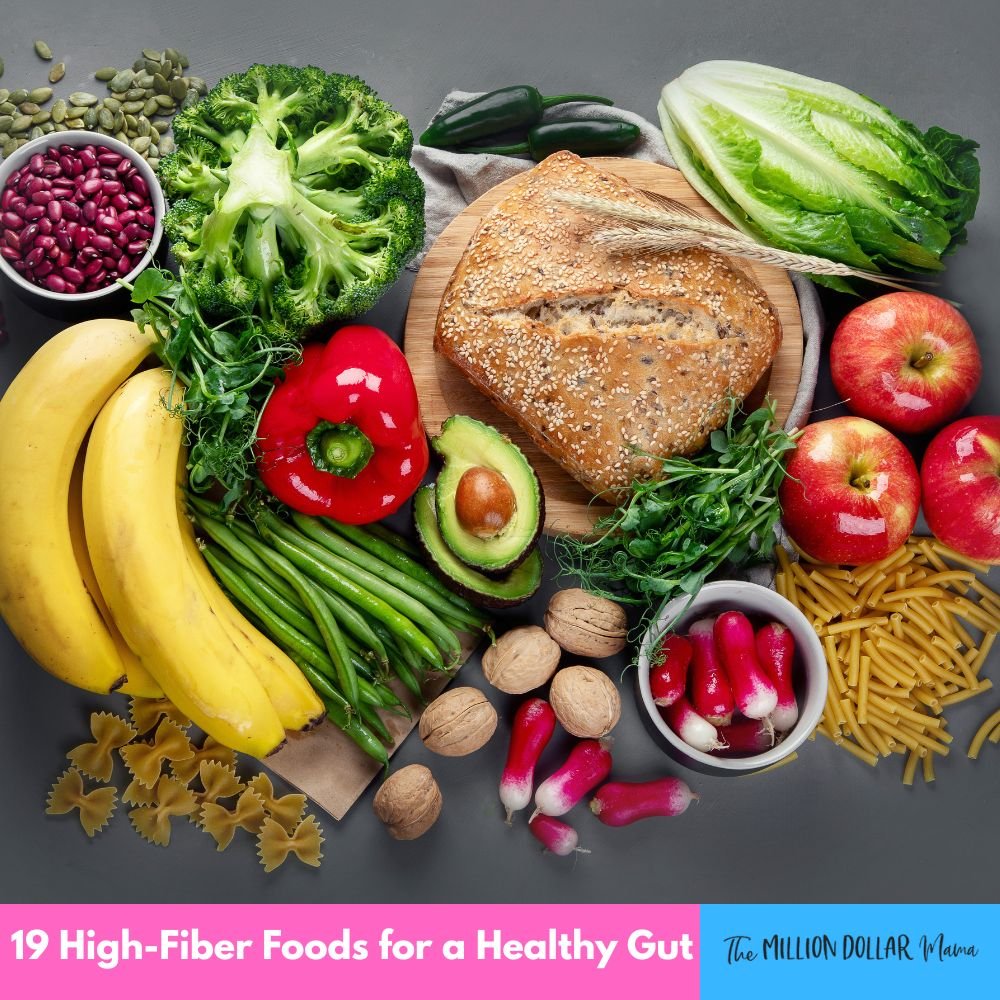
Consider including these foods:
Oats and barley.
Beans and lentils.
Chickpeas and peas.
Onions and garlic.
Apples and pears.
Vegetables such as carrots and broccoli.
They also include prebiotic fibers which can be used by some of the good bacteria in your gut.
Furthermore, fermented foods like plain yogurt and kefir can help diversify your diet. Yet fermented foods should not be substituted for fibre-rich foods, as dairy naturally contains little or no fibre.
Be aware of how certain foods make your body feel – take smaller amounts if they cause you to bloat or make you uncomfortable.
6. High-Fiber Foods and Easy Swaps for Everyday Eating
No need to scrimp on your shopping list. There are just a few quick and easy switches to boost the fibre in your food.
| Instead of | Try this |
|---|---|
| White bread | Wholemeal bread |
| Refined breakfast cereal | Plain oats |
| White rice | Brown rice |
| Regular pasta | Wholewheat pasta |
| Sweet biscuits | Fresh fruit with nuts |
| Low-fiber snack | Roasted chickpeas |
| Plain salad | Salad with beans or lentils |
They’re for you to use as often as you like, when you feel they’re right for you, your wallet and your schedule.
7. High-Fiber Foods One Day Meal Plan in Simple Words
An idea of how you can spread fibre sources throughout the day.
Breakfast
A bowl of oatmeal.
One sliced banana.
A teaspoon of chia seeds.
Morning snack
One apple.
A small handful of almonds.
Lunch
One serving of chickpea and vegetable salad.
One wholegrain bread slice.
Plain yogurt.
Afternoon snack
Carrot and cucumber sticks.
A small serving of hummus.
Dinner
Brown rice.
Lentil and vegetable stew.
A side of cooked broccoli.
This is a sample, not a strict menu. Modify the quantities to suit your feelings of hunger, age, activity, and nutritional needs.
8. FOODS HIGH IN FIBER AND HOW TO SAFELY UP YOUR CONSUMPTION
Increasing fiber intake is helpful; however, it can also result in gas, bloating or tummy pain if ramped up too rapidly.
Instead, make gradual changes.
To start with, include one fiber food into a meal you consume already. Slowly increase the quantity as you and your body adapt. Remember to also include plenty of fluids during the day.
Here are some actionable steps:
Have oats or wholegrain toast to begin the day.
Add beans or lentils to one meal.
Consume fruit in place of a low-fiber snack each time.
Include vegetables at lunch and dinner.
Choose wholegrain foods more often.
Increase portions gradually.
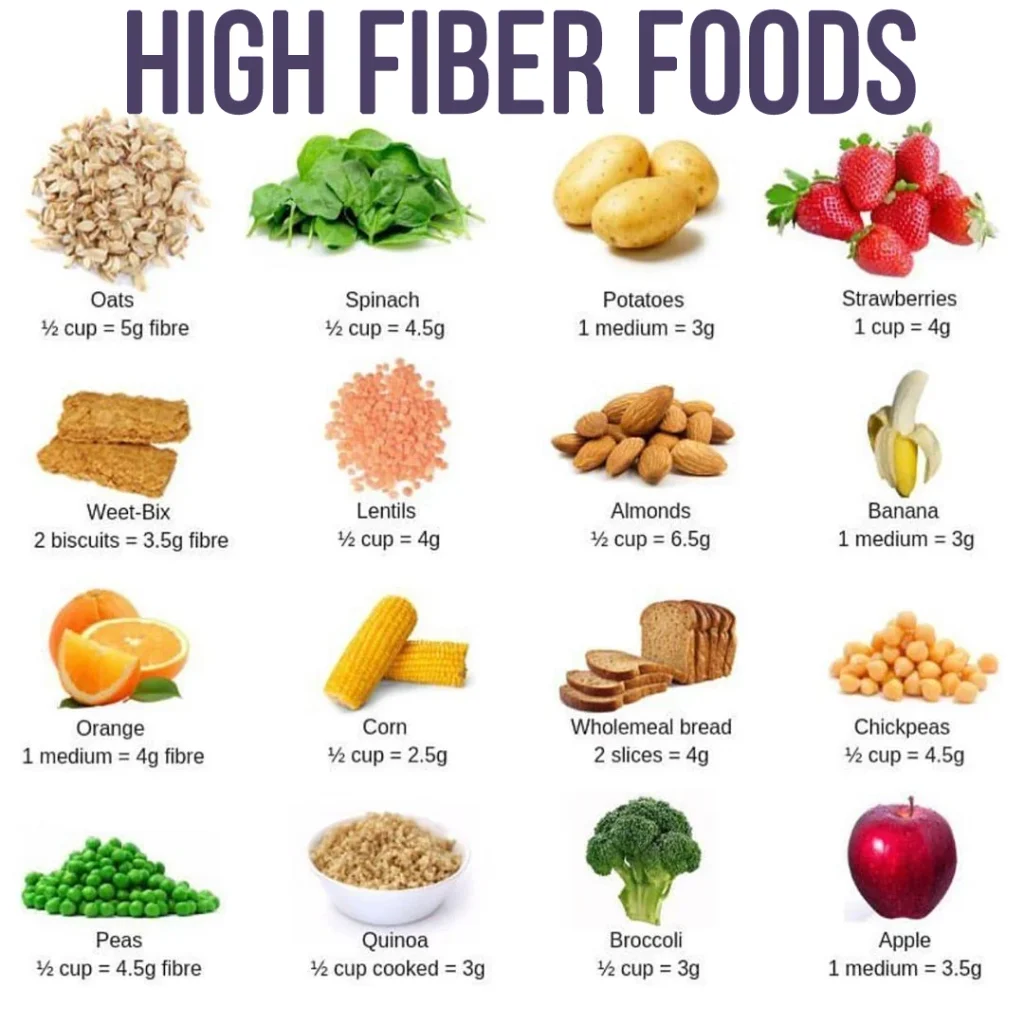
As a general rule, the adult recommended intake for fiber in the UK is around 30g a day. Everybody’s requirements may differ and those with digestive health issues may be advised differently.
https://extension.umn.edu/garden-and-home/yard-and-garden/gardening-in-minnesota/growing-herbs?
9. High-Fiber Foods: Tips for Buying Better Foods
A nutritious eating pattern begins with sensible shopping choices.
When purchasing food at the grocery store, read the nutrition label and not just the words like natural, organic, healthy, healthy choice or weight watcher.
Look for:
Whole grains listed among the main ingredients.
No added extras – no added herbs or spices.
Unsalted nuts and seeds.
Simple oats with a lot of sweetener.
Frozen vegetables without heavy sauces.
Tinned fruit in natural juice and not syrup.
Dried lentils and beans bought in bulk at convenient times. They are versatile enough to be used as ingredients for many types of dishes.
Most importantly, select foods that you can actually cook and enjoy. A realistic shopping list is much easier to follow than a high cost diet plan.
10. High-Fiber Foods: Mistakes That Can Affect Your Digestion
Even healthy foods can upset you if you’re eating too fast.
Steer clear of these common errors:
Sudden fiber increase: Going up too quickly with fiber can cause bloating. Try adding fiber more slowly.
Fading fluids: Always remember to take fibre when you are eating a diet that contains a minimum of water and appropriate fluids.
Eating one single type of fiber source: Different plant foods contain various kinds of fiber. Variety is key.
Eliminating everything you love to eat: Healthy eating can consist of a large and varied choice of foods. There’s no need to follow a rigid regime.
Overlooking digestion problems: Should you have persistent pain, fluctuations in bowels and other symptoms that are caused by irregularities, consult a doctor.
Frequently Asked Questions
1. What are the best high fiber foods for my everyday diet?
Some examples of good sources: oats, lentils, beans, chickpeas, wholegrain bread, pears, apples, vegetables, nuts and seeds. Try to include a variety of sources in your daily diet over the week.
2. Fiber food helps digestion?
Yes. Fiber helps to promote bowel motions and also aid prevent irregularity. It is essential to raise fiber intake gradually.
3. What are the best breakfast foods for high fiber?
Easy breakfast options include oats, chia seeds, wholegrain bread, pears, berries and apples.
4. Do beans and lentils provide fiber?
Yes. They both contain fiber and, likewise, also offer a healthy amount of plant protein. Toss them into soups, salads, rice dishes or stews.
5. Can High-Fiber Foods support gut health?
Yes. Certain forms of fibre are consumed by bacteria in the gut to produce fermentation. Consuming a variety of plant foods may promote a diverse gut microbiome and healthy digestion.
6. How much fiber should adults eat daily?
UK guidelines, adults should consume approximately 30 grams of fibre a day. Although this may vary by age and health circumstances.
7. Can I consume fiber foods if I am bloated?
Yes, but start with smaller amounts and build gradually. Some individuals have experienced gas or bloating if they switch to the ketogenic diet abruptly. Seek medical advice if symptoms persist.
8. Are fruits better with their skin?
When skin is edible, washed and cooked fruits and vegetables can be eaten with skin (e.g. Apples, pears) (fibre).
9. Are there dietary fibers in animal products?
No. Fiber is naturally present in veg. Meat, fish, eggs and milk do not have fiber. You can eat them together with veg, beans or whole grain carbs for a healthy meal.
10. What is the easiest way to eat more fiber?
Begin with one small change, such as trying oats for breakfast or including lentils in your lunch. Slowly incorporate more fruit, vegetables, pulses, nuts and whole-grains into your meals.
Conclusion: Incorporate High-Fiber Food into Your Daily Routine
Creating a healthy diet is a series of small steps that can be repeated many times. You could start your day with some oats, include chickpeas at lunch or enjoy brown rice with vegetables at dinner.
The safest way to eat to consume a variety of plant foods – rather than rely on a special ingredient – into your diet. With a bit of planning, fiber-packed meals can become part of your daily life.
Begin with the foods you enjoy, experiment with new pairings, and switch at your own pace. Better eating habits don’t need to be complex.