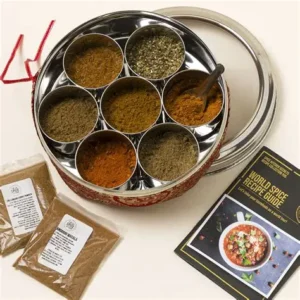
Welcome to Bitecraft.recipes, where taste and tales come together. This curated guide to the Ultimate Spice Treasury Collection uncovers fifteen regal aromatic jewels that have shaped royal kitchens, ancient trading routes and modern gastronomy alike. From the golden strands of saffron to the smoky pods of cardamom, these spices are not just ingredients but edible heritage.
Discover more gourmet ideas in our internal collection, the Spice Treasury Archive. For a history of world cuisine see encyclopedia Britannica spice overview.
1. Saffron – The Golden Crown Jewel
Saffron, known as “red gold,” gives honeyed, floral depth and luminosity. Saffron is harvested from the delicate crocus flowers and has flavored royal dishes from Persia to Spain for centuries.
Uses: Risottos, royal desserts, ceremonial rice dishes
Origin Map – Fields of Saffron Kashmir
https://maps.google.com/maps?q=Kashmir%20India&t=&z=6&ie=UTF8&iwloc=&output=embed
Find out more on saffron cultivation at FAO Agricultural Resources.
2. Cardamom – The Queen of Spice
It smells sweet, citrus-y and dazzlingly floral; cardamom scents savory feasts and delicate confections alike. It’s the foundation of Middle Eastern coffee rituals and South Asian desserts.
Chai blends, pastries, aromatic rice, coffee
Spice Hills From Kerala Map
https://maps.google.com/maps?q=Kerala%20India&t=&z=6&ie=UTF8&iwloc=&output=embed
Also see our Aromatic Blends Collection for related recipes.
3. Vanilla – The Velvet Empress
True vanilla is a warm, creamy sweet with floral undertones. Vanilla beans are a natural product that make desserts so, so luxurious.
Best Uses: Cakes, custard, ice cream, drinks
Map — Madagascar Vanilla Region
https://maps.google.com/maps?q=Madagascar&t=&z=5&ie=UTF8&iwloc=&output=embed
View Larger Map
External reference: National Geographic — Where Vanilla Comes From
4. Cinnamon – The Sweet Warm Sovereign
True cinnamon, warm and woody and gently sweet, has perfumed festive dishes for thousands of years and was once worth more than gold.
5. Cloves – The Fiery Royal Buds
Cloves are powerfully aromatic and their numbing warmth lends dramatic depth to sweet and savory preparations alike.
6. Nutmeg – The Soft Spice Ball
Grated fresh, nutmeg releases a sweet nutty perfume that makes creamy dishes and holiday baking even better.
7. Licorice’s Jewel: Star Anise
Star anise is a showstopper, both in its unusual shape and assertive flavor. It is the backbone of broths, spice blends and holiday beverages.
8. Turmeric – The Golden Healer
Earthy and vibrant, turmeric adds color, warmth and celebrated wellness benefits.
9. Black Pepper – The King of Spice
Black pepper is sharp, pungent, essential, and once drove empires of global exploration and trade.
10. Sumac – The Crimson Citrus Powder
Sumac is tangy and bright, and adds a lemony freshness without the liquid acidity.
11. Smoked paprika – The Ember Jewel
This Spanish classic is sweet and smoky, and works well in stews and grilled dishes.
12. Fenugreek – The Whisper of Maple
Many curry blends contain fenugreek which lends bittersweet and caramel notes.
13. Mustard Seeds – The Miniature Giants
Tempering the mustard seeds in oil releases a nutty warmth and a mild heat.
14. Coriander – The Citrus Seed Pearl
Coriander seeds are light and lemony, and enhance spice mixes and marinades.
15. Fennel – The Sweet Anise Crown
Fennel seed is both cooling and fragrant, and it adds sweetness to savory foods and digestive teas.
Why Create the Ultimate Spice Treasury Collection?
A thoughtfully curated spice collection elevates ordinary cooking into a sensory experience. These aromatic gems allow you to layer flavors, create signature dishes and explore world cuisines from your own kitchen.
Adds richness and complexity to recipes
- Natural flavor supports healthy cooking
- Links you to centuries of culinary tradition
- Allows you to experiment endlessly
Be sure to check out the premium ingredients over at Bitecraft Pantry Essentials.
The Majesty Behind the Ultimate Spice Treasury Collection
The Ultimate Spice Treasury Collection is not just a collection of seasonings, it is a celebration of nature’s most precious aromatic gifts. Each spice in this regal collection is steeped in centuries of tradition, trade and craftsmanship. These fragrant jewels have graced royal banquets and sacred ceremonies, influencing cuisines and cultures, transforming humble ingredients into extraordinary culinary experiences.
From Ancient Trade Roads To Contemporary Kitchens
Long before refrigeration or global shipping, spices were among the most valuable commodities in the world. These tiny treasures were transported from continent to continent by caravans crossing deserts and ships braving stormy seas. Today, their legacy endures in modern kitchens, where a dash of the right spice can summon distant lands, ancient banquets, and timeless traditions of flavor.
Art of blending aromatics and flavors
Great cooking is not only about flavor, but also about aroma, balance and depth. The spices in this collection are like instruments in an orchestra, all playing together, each one having its own special note. Warm spices calm, bright spices energize, and bold spices give structure. Layered thoughtfully, they become dishes that feel complex, luxurious and deeply satisfying.
Why You Can Taste the Difference with Premium Spices
Fresh, high-quality spices contain volatile oils that give them bright color, intense fragrance and nuanced flavor. Compared to this, inferior or stale spices can taste flat or dusty. Buy premium whole spices and grind them as you need them to realize their full potential, ensuring that every dish is defined with clarity and richness worthy of a royal table.
Build Your Personal Royal Spice Oasis
To build a personal treasury of spices requires careful selection and proper storage. Keep in tightly sealed containers in cool dark places and rotate carefully for maximum potency and freshness. Over time, this curated collection becomes a creative playground – a place where inspiration hits, new flavor combinations emerge and everyday meals become memorable culinary moments.
Turning the ordinary act of cooking into a sensory ritual
Cooking with extraordinary spices turns the usual meal preparation into a multi sensory ritual. The crackle of seeds in hot oil, the unfurling of fragrance from a simmering pot, the vivid colors spreading through a dish – all part of an experience that feeds body and soul. The right spices can make even the simplest recipe feel indulgent and festive.
A Legacy to Leave Behind
Traditions of spices are passed down from generation to generation, bringing with them stories, memories and cultural identity. A well-stocked spice treasury becomes part of a household’s heritage, shaping signature dishes and festive meals for years to come. So each jar is filled not only with flavor but with history — a living legacy preserved through taste.
Ultimate Spice Treasury Collection Frequently Asked Questions
1. What is the Ultimate Spice Treasury Collection?
It is a curated collection of fragrant spices of the highest quality that are considered essential to preparing flavorful, complex and world-inspired dishes. The focus of this collection is quality, freshness and diversity of flavor.
2. Why are the spices called “jewels of aroma”?
Many spices are rare, labor-intensive to harvest, and intensely fragrant . They are as precious in culinary value as gemstones are in material value .
3. The most expensive spice in the world is what?
The world’s most expensive spice, saffron, due to its paltry yield per flower and labor-intensive hand-harvesting.
4. How to store premium spices?
To keep them potent, store in airtight containers in a cool, dark place away from heat, moisture and direct sunlight.
5. Are whole spices better for shelf life than ground spices?
Yes. per-ground spices lose their essential oils and flavor compounds much faster than whole spices.
6. How often do you replace spices?
Ground spices generally last about 6 to 12 months while whole spices can last 2 to 4 years if stored in optimal conditions.
7. Can spices increase the nutritional value of food?
Many spices have antioxidants, anti-inflammatory compounds, and micro nutrients, all of which can help you stay healthy overall.
8.What’s the best way to get maximum flavor from spices?
To enhance aroma and depth, lightly toast whole spices in a dry pan or bloom ground spices in warm oil.
9. Organic Spices Versus Conventional Spices
Organic spices may have less chemical residue and sometimes fresher flavor, but quality depends on where and how they’re sourced.
10. Why do some spices fade in color as they age?
Spices lose their flavor and potency because light, heat and oxygen degrade pigments and essential oils.
11. What are the must-have spices for a beginner’s collection?
A good place to start a treasure of spices is with black pepper, cinnamon, cumin, turmeric, paprika, coriander and cardamom.
12. Can spices be frozen for a longer storage life?
Yes it can be frozen to extend shelf life . This is especially true for bulk quantities. If you seal it well to keep out moisture .
13. Herbs and spices – what is the difference?
Herbs usually come from leafy parts of plants, whereas spices come from seeds, bark, roots, buds or fruit.
14. Why do some recipes call for fresh ground spices?
Grind at the time of use to release volatile oils for a brighter and more complex flavor than the per-ground versions.
15. Is spicy food the same as food with a lot of spices?
Not always. Spicy generally refers to heat from chili peppers, spiced refers to aromatic seasoning without intense heat.
16. May I mix spices and create my own blends?
Absolutely. Most iconic blends like garam masala or ras el hanout are a combination of several spices and are blended to achieve balance.
17. How does a chef balance a dish with strong spices?
They build flavors gradually, combining pungent spices with gentler ingredients, and tweaking acidity, sweetness or fat for balance.
18. What is blooming spices in oil?
To ” bloom ” spices , you heat them briefly in oil or butter . This dissolves the fat-soluble flavor compounds and releases the aroma .
19. Is there a spice that works well for sweet and savory dishes?
Yes. Classic examples include cinnamon, nutmeg, cardamom and cloves, which straddle the line between dessert and savory.
20. Why do some spices come from specific parts of the world?
Climate, soils and cultural practices all influence which spices grow well and how they are used locally.
21. Are old spices safe to eat?
Old spices are generally safe, but they can taste bland or musty, and that can affect the overall quality of the dish.
22. How can you tell if a spice is still fresh?
Crush a little between your fingers, or rub it. If it has a strong smell, it is fresh; if weak, it is old.
23. What part do spices play in world cuisines?
Spices are the identity of regions, historically preserve food, and craft signature flavor profiles across cultures.
24. Can you add spices to drinks?
Yes. Aromatic spices add depth and warmth to many drinks, from chai tea to mulled wine and spiced coffee.
25. Why have an entire treasury of spices at home?
Creative cooking, authentic recipes from across the globe, and the ability to turn simple ingredients into extraordinary meals all hinge on a well-stocked collection.